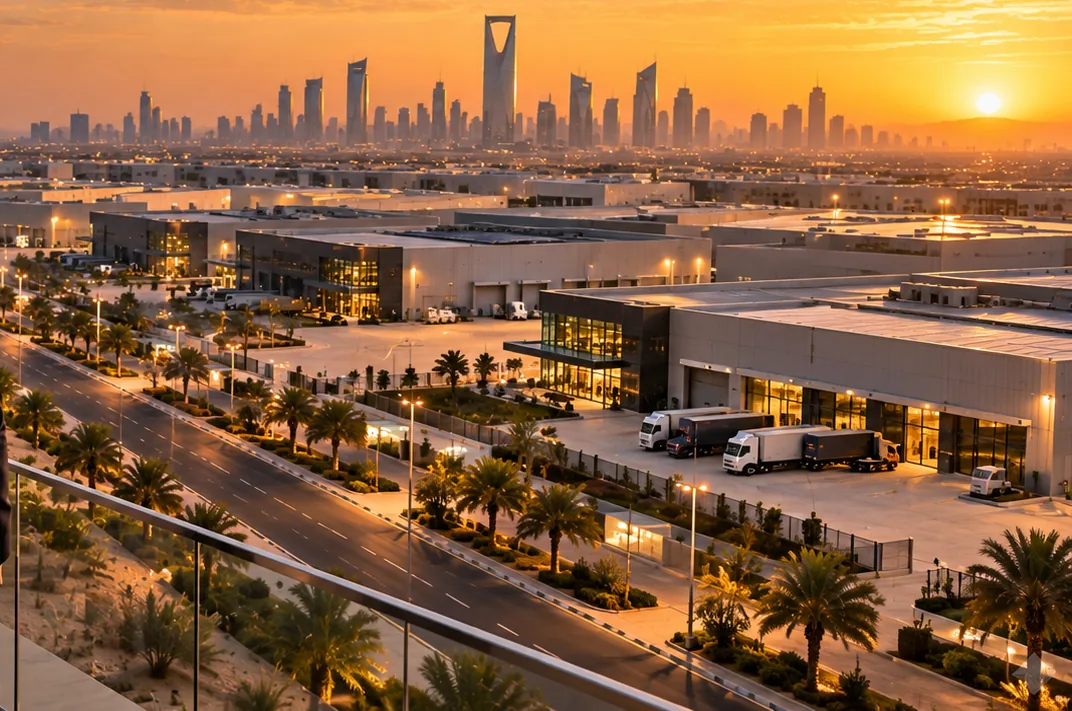
Saudi Arabia's regulatory environment has changed more in the past six years than in the previous sixty. Most of what a European executive believes about doing business in the Kingdom, from the mandatory local partner to the closed sectors and the impenetrable licensing, is either obsolete or was never quite accurate.
This guide sets out what the rules are today: entity structures, licensing, tax, Saudisation, local content and the RHQ regime. It is a reference rather than a strategy, but you cannot build a strategy without it.
One caveat before anything else. Saudi regulation is being actively rewritten, and rewritten quickly. Every figure and threshold below should be checked against current MISA guidance before you act on it. Nothing here is legal or tax advice.
1. The reform that changed everything
Before 2019, most sectors required a Saudi partner holding at least 25 per cent, and many required majority Saudi control. For a European company this was the structural deterrent. You could not own your own business.
That requirement has gone in most sectors. Foreign investors can now hold 100 per cent ownership, with no obligation to take a local sponsor or surrender equity.
This is the single most consequential change in the Saudi investment regime since Vision 2030 began, and it is why the market is worth reassessing even if you looked at it five years ago and walked away.
The qualifier matters, though. Most sectors is not all sectors.
2. The negative list
Saudi Arabia maintains a negative list of activities closed or restricted to foreign investment. It has historically covered areas such as oil and gas exploration (with restrictions), certain security services, and specific media and defence activities.
The list has shrunk considerably, from over 40 restricted activities a decade ago to fewer than 20 today, and MISA reviews it annually, with each revision generally opening more.
Some sectors also require approval from a sector regulator in addition to MISA. Banking goes through the Saudi Central Bank, capital markets through the CMA, healthcare through the Ministry of Health, and there are equivalents for aviation, insurance and others.
Do not assume full foreign ownership applies to your activity. Check it against MISA's official activity list before committing to anything. It takes ten minutes and prevents a six-figure mistake.
3. Entity structures
Three structures cover almost all foreign entrants.
A limited liability company is the default choice for most foreign investors. It is straightforward, flexible, and permits 100 per cent foreign ownership in open sectors.
A branch of a foreign company is possible but carries activity restrictions and additional approvals. Branch licences are frequently tied to a specific project or contract, which limits their usefulness as a general market presence.
A joint-stock company is used for larger investments or entities intended for listing.
Minimum capital starts at around SAR 25,000 but varies significantly by activity, and some sectors carry substantially higher requirements. Check yours rather than budgeting from the headline figure.
4. The MISA licence
The MISA licence, issued by the Ministry of Investment of Saudi Arabia (formerly SAGIA), is the legal authorisation for a foreign entity to invest and operate commercially in the Kingdom. Without it a foreign-owned company cannot trade, cannot hire and cannot open a bank account. Nothing else proceeds until it exists.
What you need
A corporate entity registered outside Saudi Arabia, typically active for at least a year. Attested corporate documents, meaning your home commercial registration and your memorandum and articles of association. Audited financial statements, commonly for the previous one or two fiscal years. Passports for all shareholders, directors and the designated General Manager. A power of attorney.
The attestation chain
Every foreign document has to be notarised in the country of origin, legalised by the Saudi Embassy there, and then translated into Arabic by an approved translator inside Saudi Arabia.
Embassy attestation on its own usually takes two to four weeks depending on the country. It is almost always the longest single step, and it can run in parallel with your commercial work. Start it early.
The classification trap
MISA classifies activities using ISIC Rev. 4 codes, not the NACE, NAICS or SIC systems European applicants are used to.
Misclassification is one of the most common causes of delay. Worse, a wrong code can impose sector conditions that have nothing to do with your actual business, and unwinding them takes time. A management consultancy that files itself under IT services inherits an entirely different regulatory profile.
Get the activity code right before anything else, because everything downstream inherits the error.
Timeline
With clean documentation, licensing commonly runs two to six weeks. The variance comes almost entirely from document quality and activity type rather than MISA's processing speed, which has improved substantially. Companies that submit incomplete paperwork spend months and then conclude the system is slow. Usually it isn't.
5. What comes after the licence
The MISA licence is the gate, not the finish line.
Next comes Commercial Registration from the Ministry of Commerce, which formally establishes your legal presence. Then Chamber of Commerce registration. Then ZATCA, the Zakat, Tax and Customs Authority, for corporate income tax, VAT and withholding tax. Then GOSI, the General Organization for Social Insurance, for employment. Then municipality and sector-specific permits depending on what you do.
Companies routinely budget for the MISA licence and get caught out by the length of the tail. Plan for the whole chain.
6. Tax
| Tax | Rate | Applies to |
|---|---|---|
| Corporate income tax | 20% | Foreign-owned entities |
| VAT | 15% | Most goods and services |
| Zakat | 2.5% | Saudi/GCC-owned entities, in lieu of CIT |
| Withholding tax | Varies by payment type | Payments to non-residents |
Two exceptions change this arithmetic materially.
Special Economic Zones offer 5 per cent corporate tax for up to 20 years, plus VAT exemptions and customs duty deferrals, in targeted sectors including cloud computing, renewable energy and logistics.
The RHQ programme offers zero corporate income tax and withholding tax exemption for 30 years, covered below.
For a company with a genuine regional footprint, these are not marginal incentives. They can change the entire investment case.
7. Saudisation (Nitaqat)
Saudisation is a nationalisation programme that sets quotas for employing Saudi nationals in the private sector. Companies are categorised by how well they meet quotas, which vary by industry and company size. Non-compliance brings fines and restrictions on recruiting foreign workers.
The quota is the visible part. The real constraint is competition for talent.
Around 67 per cent of Saudis are under 35, so the pipeline is large but skewed towards the inexperienced. International firms compete for qualified Saudi nationals against public-sector and local employers with deeper pockets. Salary expectations run high even among candidates without much experience. And Saudis with international-firm experience get recruited away aggressively, which makes retention a persistent problem.
Foreign companies in the Kingdom consistently rank labour market regulation and access to specialists as their two greatest sources of operational friction, ahead of licensing and ahead of regulation generally.
Treat Saudisation as a hiring and retention strategy rather than a compliance form. Companies that treat it as paperwork discover the problem at exactly the moment they need to scale.
RHQ holders receive a ten-year exemption.
8. Local content
The local content regime operates through several channels. IKTVA, Aramco's In-Kingdom Total Value Add programme, governs its supply chain and therefore much of the energy sector. Made in Saudi covers manufacturing and industrial branding. LCGPA rules apply local content requirements to government procurement generally.
Local content is calculated as the ratio of spending on Saudi elements, meaning goods, services, assets, technology and workforce, against total spending. International firms bidding on contracts submit a local content plan showing how they will reach their target percentage by the end of the contract. Failure to comply can result in exclusion from future government contracts.
The part most companies miss is that firms meeting local content thresholds can charge 10 to 20 per cent more, depending on their score.
That reframes the question. Local content bolted onto an existing operation is pure cost. Local content designed into your entry, through supplier selection, Saudi hiring, training investment and eventually local production, is margin, and one of the few levers a European supplier has against Chinese price competition.
Expect these requirements to tighten. The direction of Saudi industrial policy is not ambiguous.
9. The RHQ programme
Run by MISA and the Royal Commission for Riyadh City, the Regional Headquarters programme is designed to pull multinationals' regional operations into Riyadh.
The incentives are substantial: zero corporate income tax and withholding tax exemption for 30 years, a ten-year exemption from Saudisation requirements, and unlimited visas for RHQ employees with benefits extending to dependents.
The part that actually matters is that companies without an RHQ face restrictions on public procurement and access to government contracts.
571 multinationals have already established one. In a market where the state and state-adjacent entities do most of the buying, non-participation is not a forgone tax break. It closes off a large share of the addressable market.
The programme has quietly evolved from an incentive scheme into a procurement condition, and every company selling into government or giga-project channels needs an explicit position on it.
10. Operational realities the rulebook does not mention
Three things that are not regulations but function like them.
Payment terms run long, materially longer than European norms. This is among the most consistent complaints from foreign companies operating in the Kingdom, and it is a working capital question to design for rather than absorb.
The market is distributor-driven. Most international companies enter through distributors and many stay there. Due diligence on a partner requires local capability, and a distributor who looks credible on paper may turn out to be a gatekeeper who caps your ceiling.
Procurement transparency is uneven. Foreign firms report that tender processes can lack visibility and that specifications change. Building a bid strategy on the assumption of European procedural predictability is a mistake.
Summary
| Requirement | What to know |
|---|---|
| Ownership | 100% foreign ownership permitted in most sectors. Verify yours |
| Negative list | Fewer than 20 restricted activities, shrinking annually |
| Entity | LLC for most. Minimum capital from ~SAR 25,000, varies by activity |
| MISA licence | The gating step. Nothing proceeds without it |
| Attestation | 2 to 4 weeks for embassy legalisation. Start early |
| Activity code | ISIC Rev. 4. Misclassification is the top cause of delay |
| Licensing timeline | 2 to 6 weeks with clean documents |
| Corporate tax | 20%. 5% in SEZs, 0% for RHQ holders for 30 years |
| VAT | 15% |
| Saudisation | Quota by sector and size. Really a talent problem |
| Local content | A gate, and a 10 to 20% price premium |
| RHQ | Increasingly a procurement condition |
The point of all this
Saudi Arabia's regulatory environment is not hostile. It is specific. Every requirement above is knowable and every one is solvable.
What it punishes is improvisation. The companies that struggle are not the ones that found the rules too hard. They are the ones that met the rules in the wrong order, filed the wrong activity code, started attestation too late, or treated Saudisation as a form to sign rather than a workforce to build.
None of that is difficult. It is just considerably easier from inside the Kingdom than from Stockholm.
Sources and verification
Compiled from the Ministry of Investment of Saudi Arabia (MISA), the Zakat, Tax and Customs Authority (ZATCA), the Local Content and Government Procurement Authority (LCGPA), and the Business Climate Survey for Swedish Companies in Saudi Arabia 2025 (Business Sweden).
Saudi regulation changes frequently. Tax rates, capital thresholds, Saudisation quotas, the negative list and RHQ conditions are all subject to revision. Verify every figure against current official guidance before acting. This guide is informational and is not legal or tax advice.